// How was it when we weren‘t even born? //
Back in the days, when we weren’t even born, Romans used to be one of the most advanced societies in this world. During wartime their Army used to settle in open wide fields, quickly organizing the space they were on, shaping it the way it was most suitable for them. They used a simple yet efficient geometry, starting from the most common shape symbol of order and accuracy: the square.
// How did it shape what we are living now? //
What did they leave to us? How are we dealing with the past, knowing most of what we started on comes in many ways from them? Evidence of their existence is still under our eyes even though we never notice it; just most of the cities we live in, come from the ancient Castra and follow their rules and hierarchy.
// How should we organize it? //
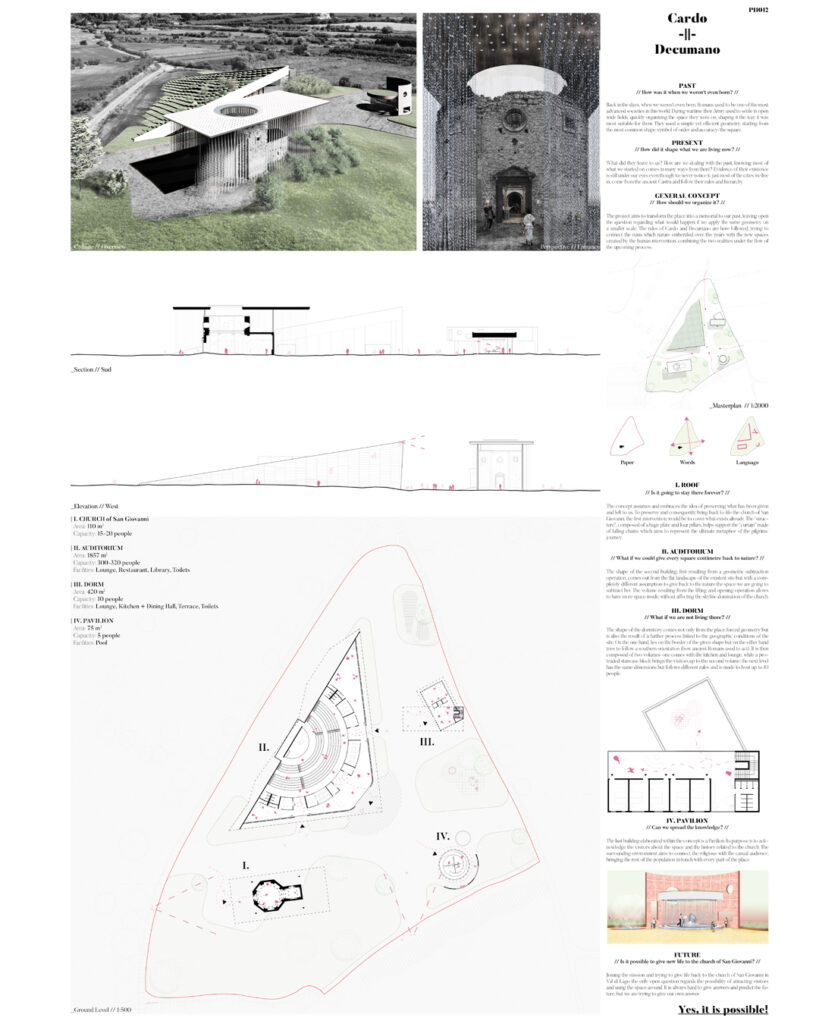
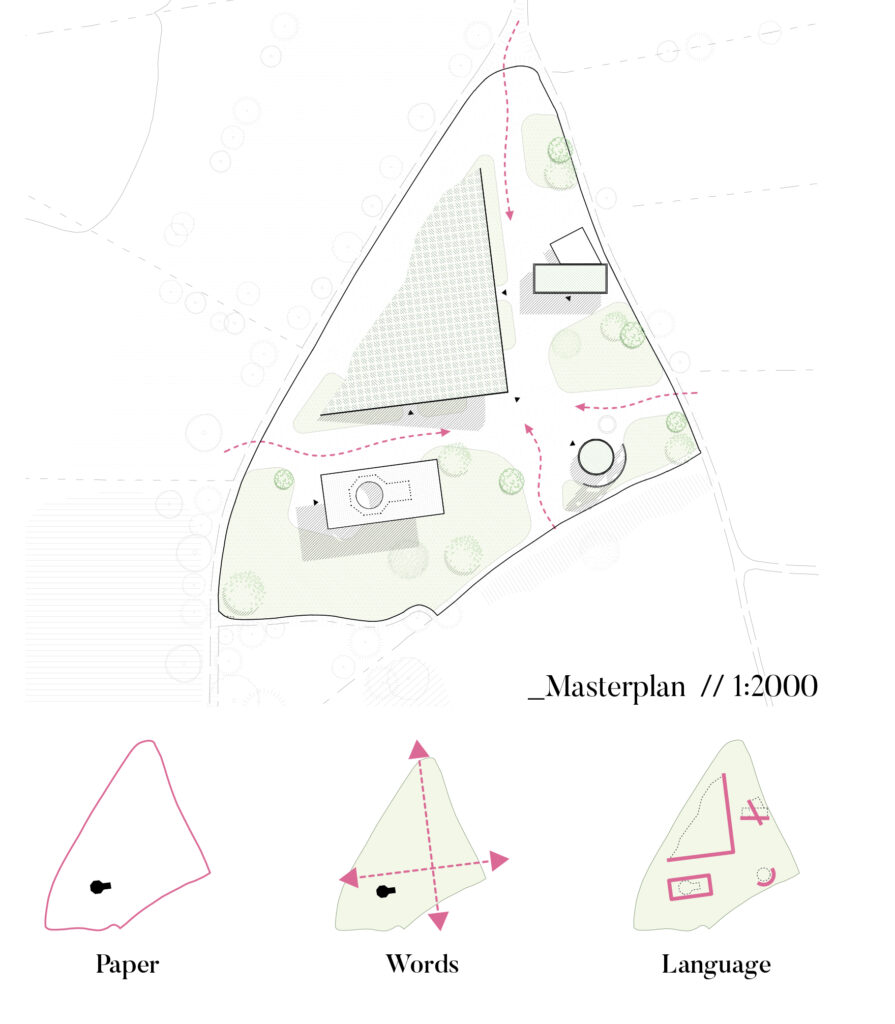
The project aims to transform the place into a memorial to our past, leaving open the question regarding what would happen if we apply the same geometry on a smaller scale. The rules of Cardo and Decumano are here followed, trying to connect the ruins which nature embezzled over the years with the new spaces created by the human intervention, combining the two realities under the flow of the upcoming process.
// Is it going to stay there forever? //
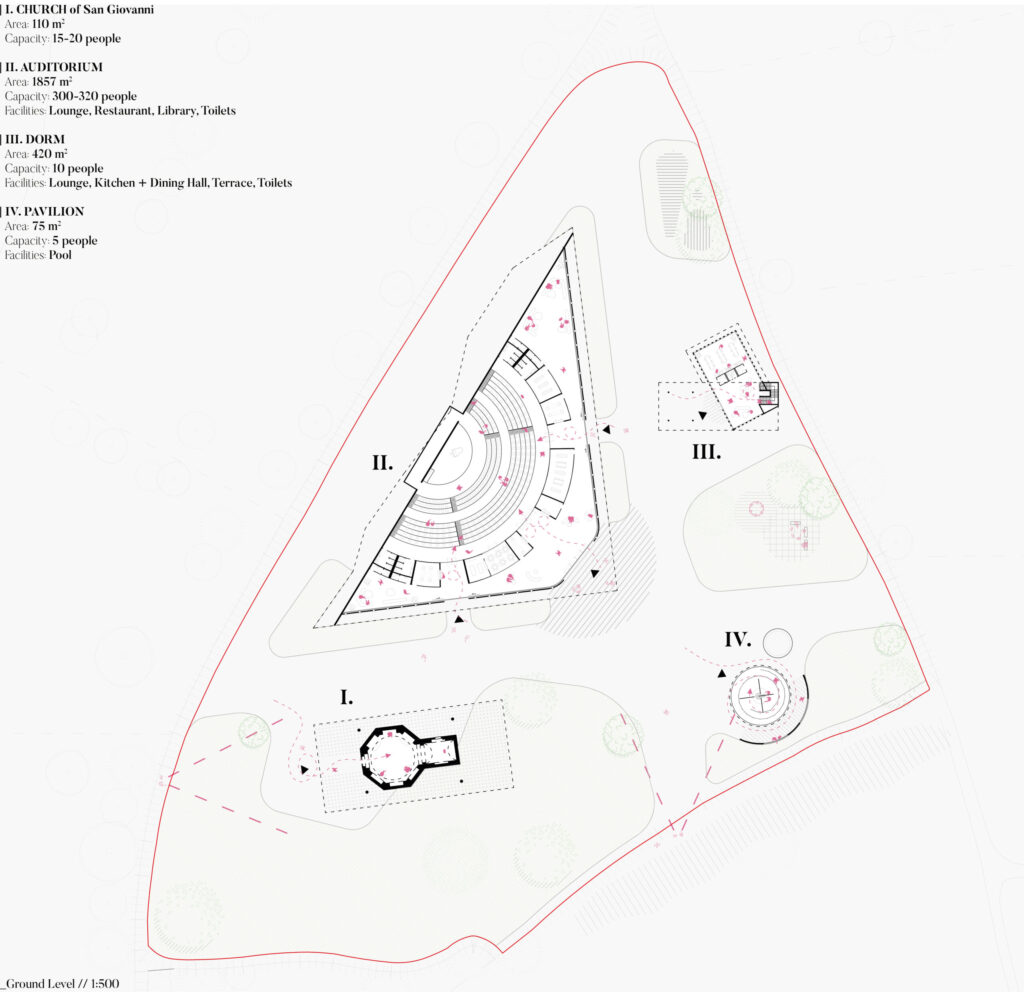
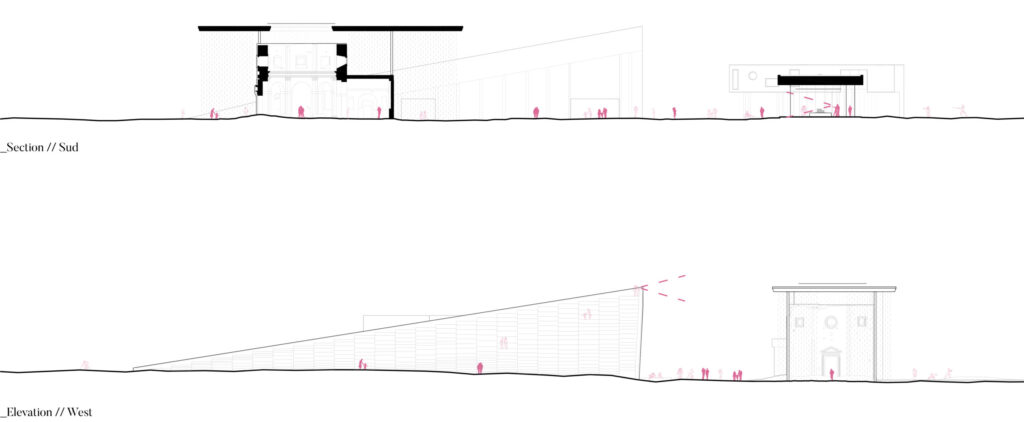
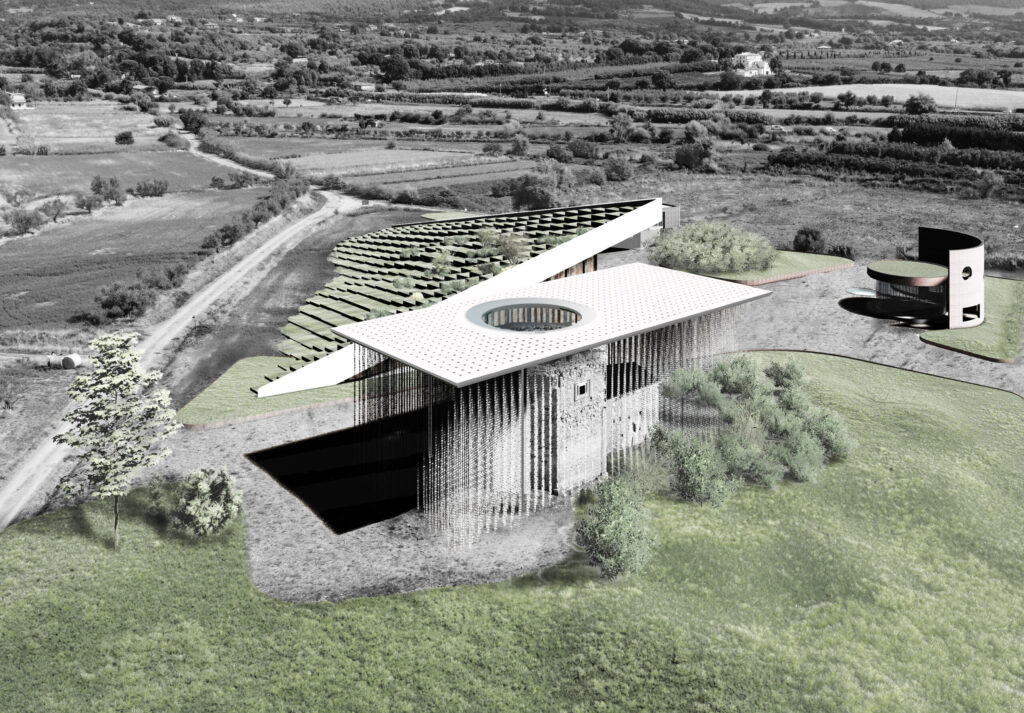
The concept assumes and embraces the idea of preserving what has been given and left to us. To preserve and consequently bring back to life the church of San Giovanni, the first intervention would be to cover what exists already. The “structure”, composed of a huge plate and four pillars, helps support the “curtain” made of falling chains which aims to represent the ultimate metaphor of the pilgrims’ journey.
// What if we could give every square centimetre back to nature? //
The shape of the second building, first resulting from a geometric subtraction operation, comes out from the flat landscape of the existent site but with a completely different assumption: to give back to the nature the space we are going to subtract her. The volume resulting from the lifting and opening operation allows to have more space inside, without affecting the skyline domination of the church.
// What if we are not living there? //
The shape of the dormitory comes not only from the place forced geometry but is also the result of a further process linked to the geographic conditions of the site. On the one hand, lies on the border of the given shape but on the other hand tries to follow a southern orientation (how ancient Romans used to act). It is then composed of two volumes: one comes with the kitchen and lounge, while a protruded staircase block brings the visitors up to the second volume; the next level has the same dimensions but follows different rules and is made to host up to 10 people.
// Can we spread the knowledge? //
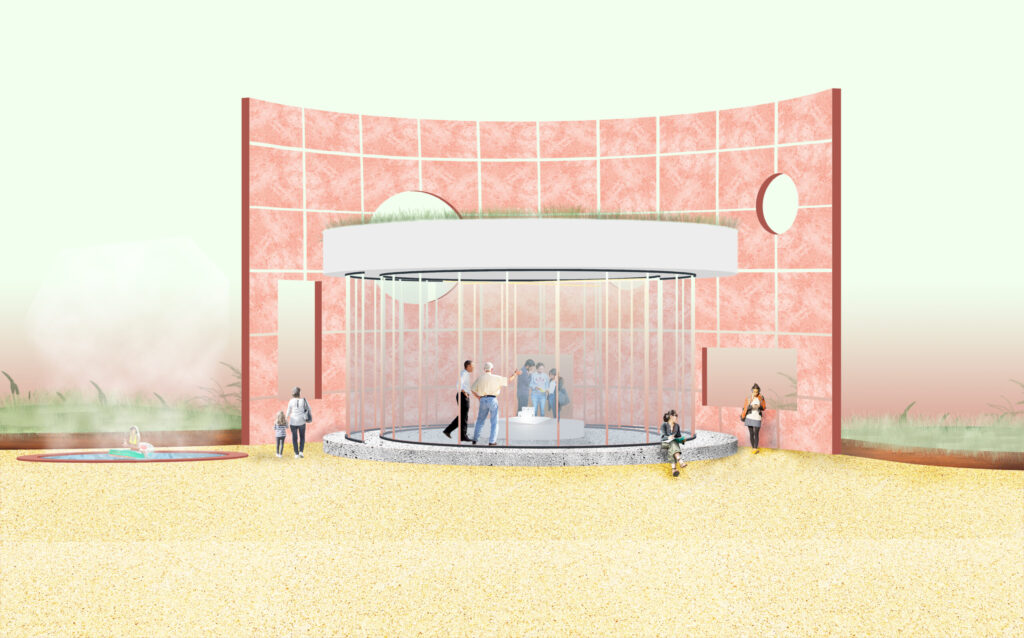
The last building elaborated within the concept is a Pavilion. Its purpose is to acknowledge the visitors about the space and the history related to the church. The surrounding environment aims to connect the religious with the casual audience, bringing the rest of the population in touch with every part of the place.
// Is it possible to give new life to the church of San Giovanni? //
Joining the mission and trying to give life back to the church of San Giovanni in Val di Lago opens questions regarding the possibility of attracting visitors and using the surrounding space. It is always hard to predict the future, but we are trying to give our own answers.